
Bambu Lab: The 3D Printer Brand That Made Fast, Reliable Printing the Default

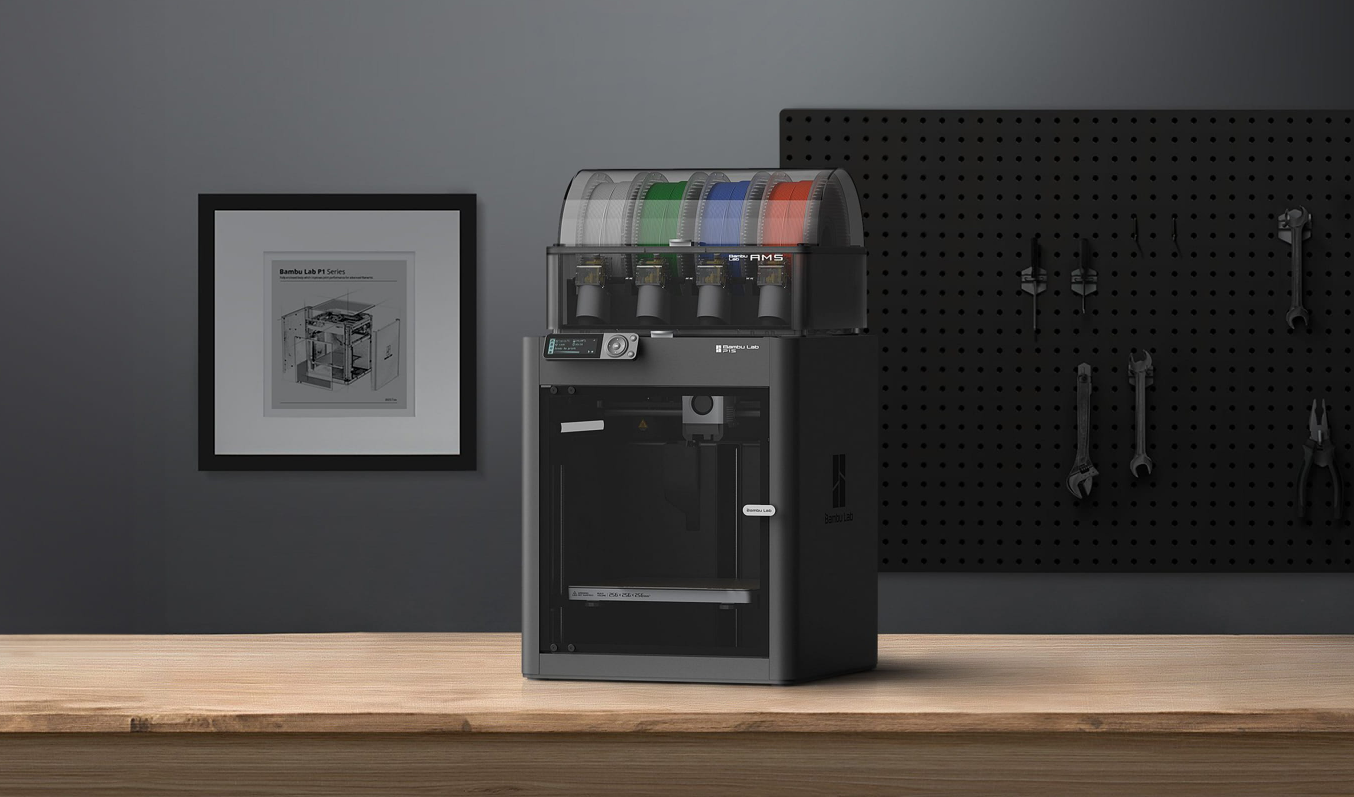

For most of the history of consumer 3D printing, getting a good result required accepting that things would occasionally go wrong. Bed levelling issues, failed first layers, spaghetti prints caused by a snapped filament, hours of calibration before a single usable object came out. Bambu Lab changed that expectation when it entered the market, and in a relatively short time it has become the reference point that other manufacturers are now measuring themselves against.
What Made Bambu Lab Different From the Start
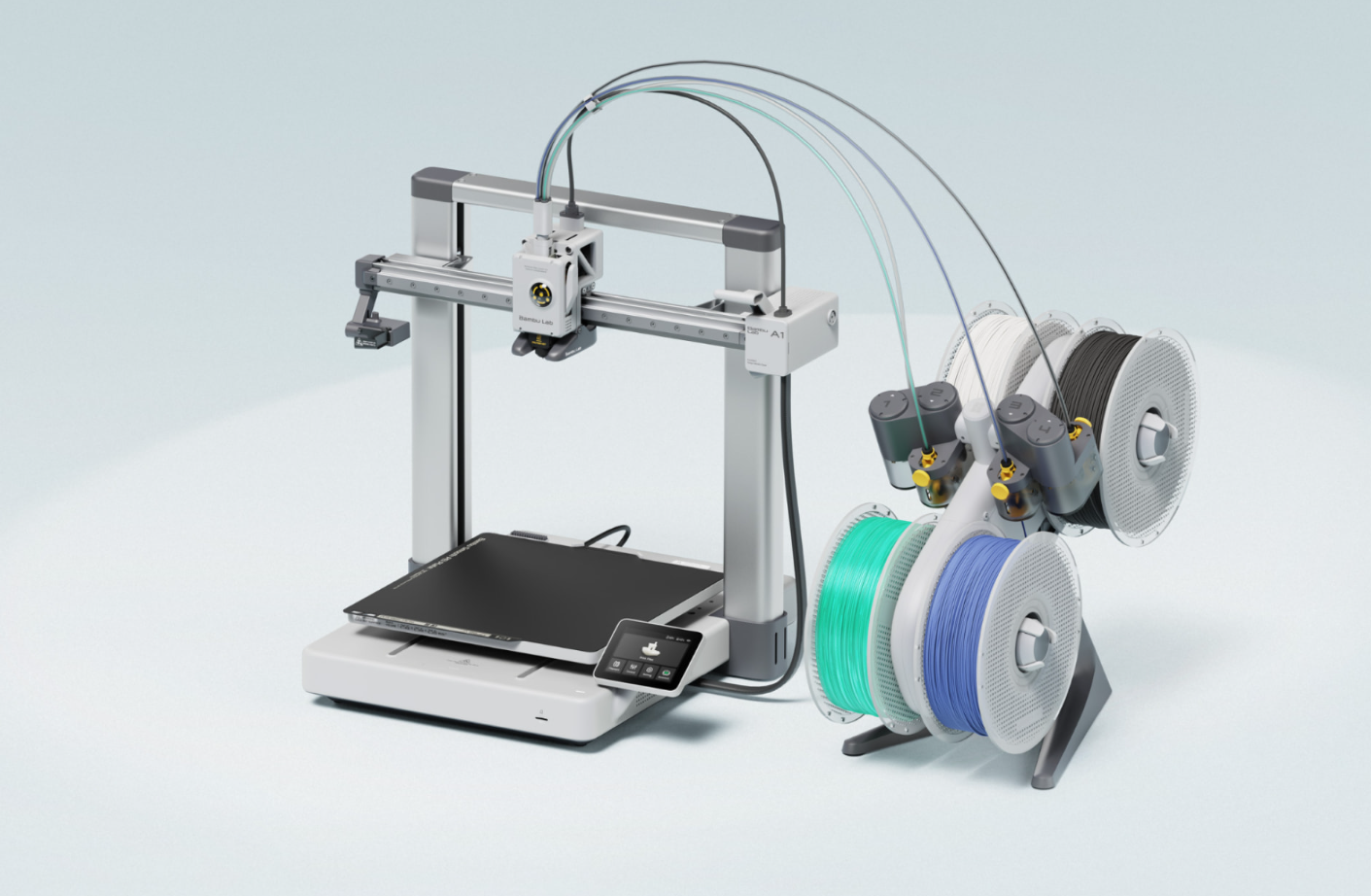
The brand launched with a simple and genuinely ambitious goal: make 3D printing work the way most people assumed it already did. That meant automatic calibration, fast print speeds without quality trade-offs, reliable multi-material handling, and software that guided the user rather than demanded expertise from them. The results have been difficult for the rest of the market to ignore. Print speeds of up to 500mm/s with acceleration from zero in 0.025 seconds, automatic bed levelling that delivers a reliable first layer every time, vibration compensation that keeps quality consistent at high speeds, and an ecosystem that connects printers, filament, software, and a content library into a coherent whole. Four years after launch, the lineup has grown to nine machines across four distinct families, each one meaningfully differentiated from the last.
The A Series: Where Most People Should Start
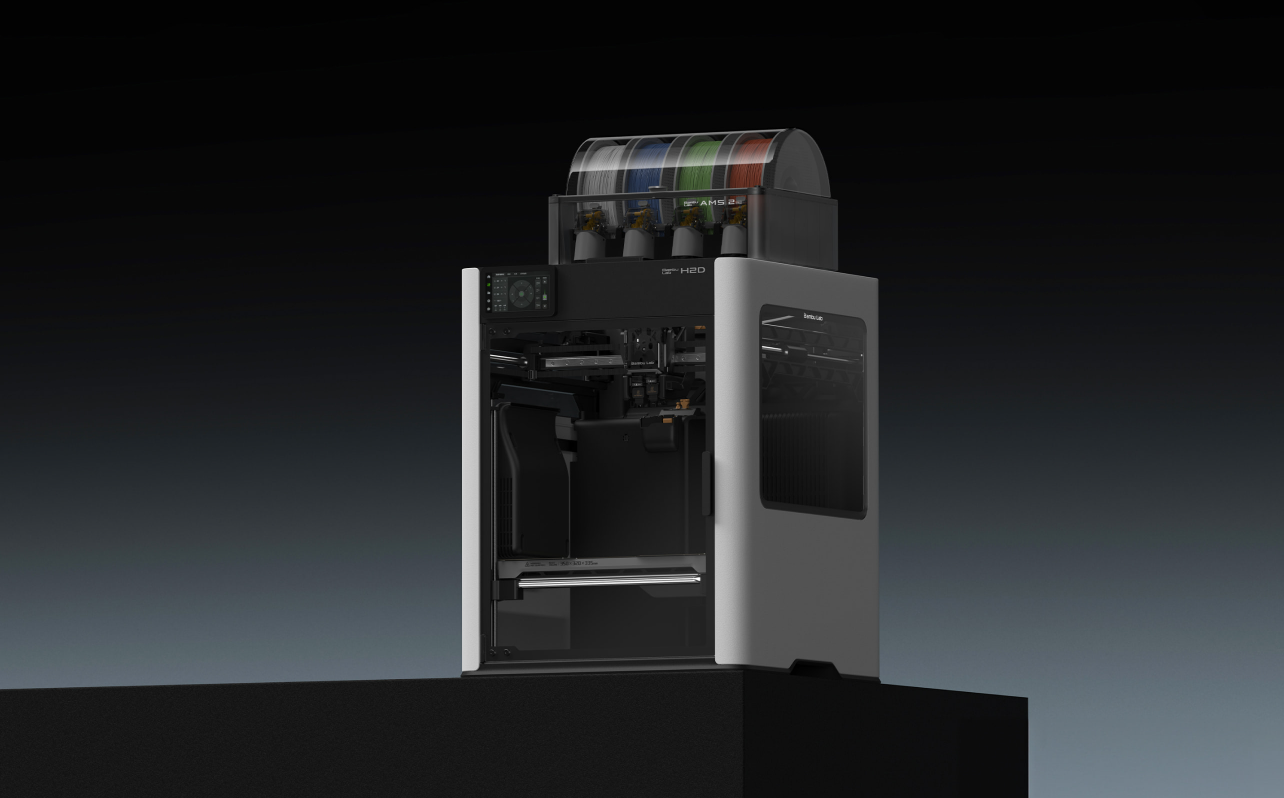
The A1 and A1 Mini sit at the entry level of the Bambu Lab range and represent the best starting point for anyone new to 3D printing or returning after a frustrating experience with an older machine. Both use a bed-slinger design, where the print bed moves on the Y axis while the print head handles X and Z, which is a different approach from the CoreXY systems used in the P and X series but one that has been refined to deliver comparable quality for standard materials.
The A1 offers a 256 x 256 x 256mm build volume, a full-colour touchscreen, quick-change nozzles that require no tools to swap, and a noise level as low as 49dB during operation. The A1 Mini is the more compact option for smaller spaces and budgets. Both are compatible with the AMS Lite, Bambu Lab’s multi-colour material handling system, which allows up to four colours to be used in the same print without manual filament swaps.
For anyone printing primarily in PLA, PETG, or TPU and wanting speed, reliability, and easy multi-colour capability without a steep learning curve, the A1 Combo is one of the most complete packages available at its price point.
The P Series: The Enclosed Workhorse
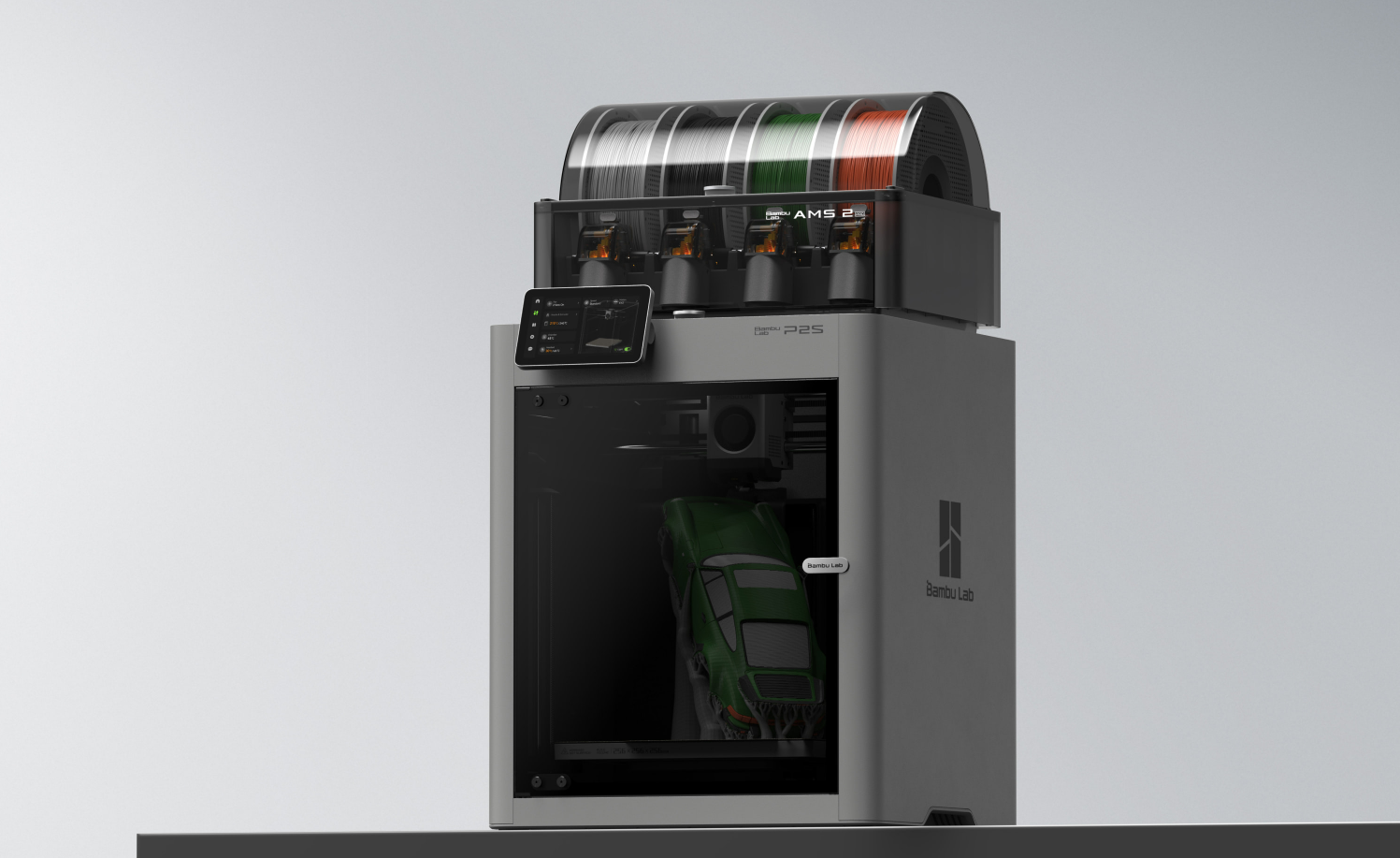
The P2S is the current flagship of the P series and a direct evolution of the P1S, one of the best-selling 3D printers ever made. The fully enclosed chamber is the defining feature of this tier, opening up access to engineering-grade materials including ABS, ASA, and carbon fibre composites that require a stable thermal environment to print reliably. Without an enclosure, these materials warp, crack, or delaminate as they cool unevenly, which makes open-frame printers unsuitable for them regardless of how fast or well-calibrated they are.
The P2S brings meaningful upgrades over its predecessor: a new 5-inch full-colour touchscreen, the DynaSense extruder with filament grinding detection for tighter extrusion control, Active Airflow cooling for improved bridging and overhangs, AI-powered error detection that catches problems before they waste a full print, and a high-rate 1080p camera for real-time monitoring. It also supports the full AMS system, allowing up to 16 colours across four stacked units for ambitious multi-material projects. For makers who have outgrown an entry-level printer, small studios, and professional print farms that need consistent uptime and material flexibility, the P series is where most serious users land.
The X Series: Dual Extrusion at an Accessible Price
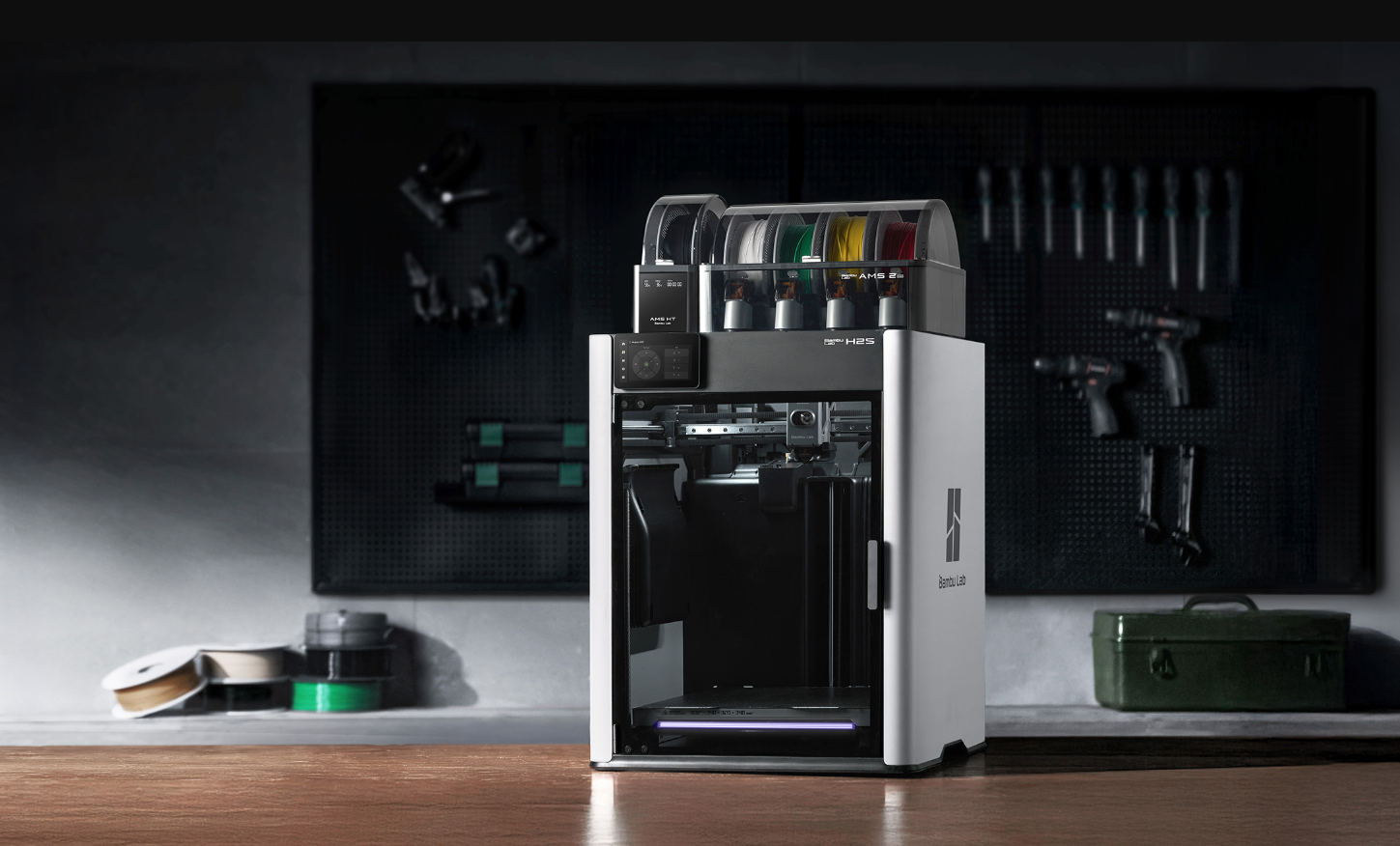
The X2D is the newest machine in the lineup and fills a gap that the brand had not previously addressed. Dual-nozzle printing, where two separate hotends allow a printer to use one material for the part and a different material for support structures simultaneously, has historically required either a significant price premium or a willingness to accept reliability trade-offs. The X2D brings dual-nozzle capability into a compact, fully enclosed footprint at a price that makes it viable for individual buyers rather than just businesses. It is actively heated to 65°C, includes the full suite of current-generation sensors and monitoring including a toolhead camera for AI-assisted error detection, and supports the AMS system for multi-colour printing alongside the dual-nozzle functionality. For workflows that regularly involve flexible-rigid material combinations, or where minimising support removal time matters, it represents a meaningful step up from the P series.
The H2 Series: Personal Manufacturing
The H2D and H2C sit at the top of the range and are in a different category from standard 3D printers. These machines are designed around the concept of personal manufacturing, combining 3D printing with laser engraving, cutting, and plotting from the same footprint. For studios and makers who currently use multiple separate machines for different fabrication tasks, consolidating into a single H2-series machine changes the economics and the workflow considerably.
MakerWorld and the Ecosystem
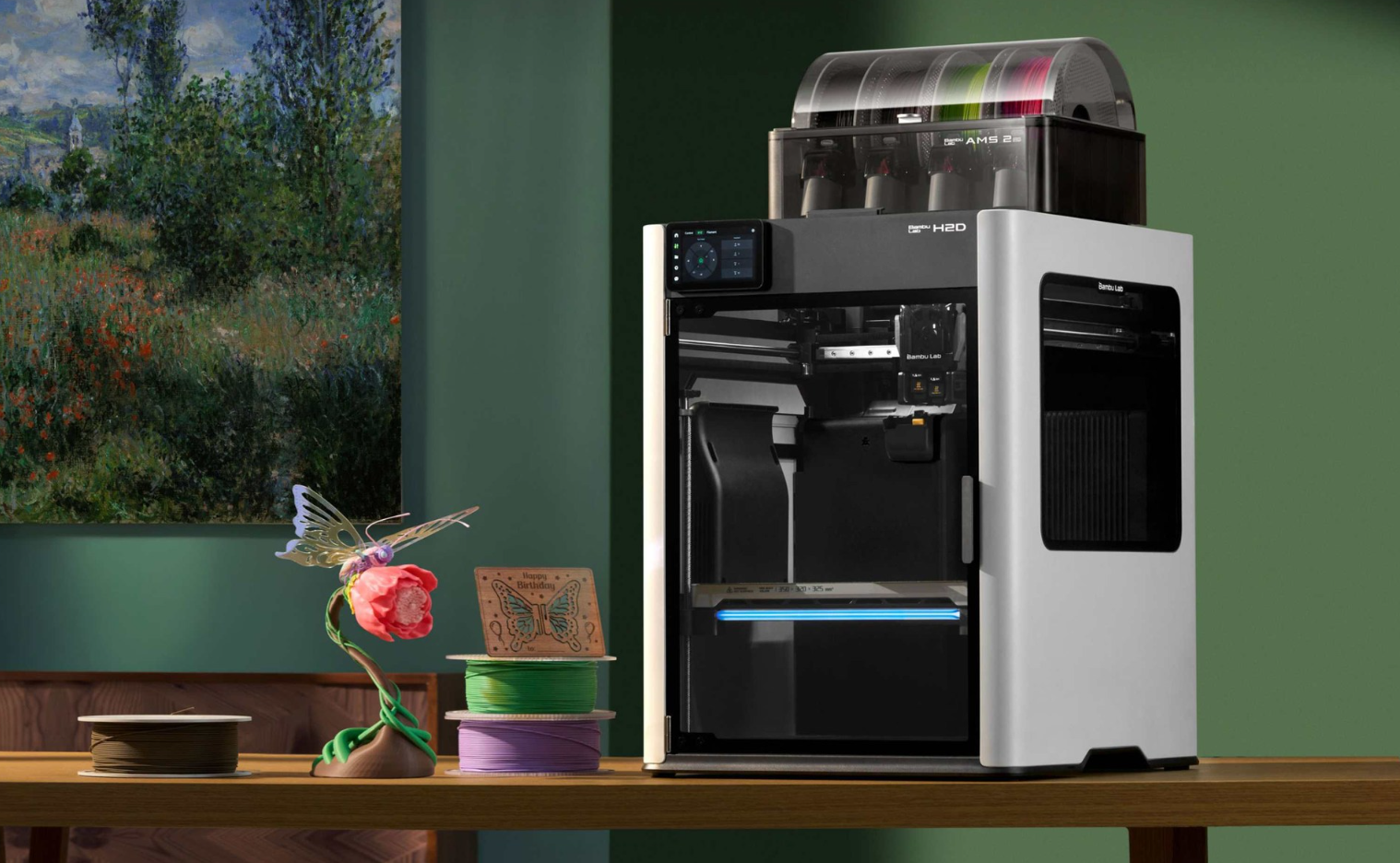
The hardware is only part of what Bambu Lab has built. Bambu Studio, the slicing software, is available on desktop and connects directly to printers over Wi-Fi for remote monitoring and print management. The mobile app extends that control to any device. MakerWorld, the brand’s content platform, gives users one-click access to a large library of printable models that are pre-configured for Bambu Lab machines, removing the slicing and settings work that typically comes between finding a design and actually printing it.
For users who value privacy, a LAN-only mode is available on all printers, allowing full local control without cloud connectivity. Software support is guaranteed until at least 2030 for current models, and all products are confirmed to continue functioning beyond that period with the same feature availability.
For anyone considering their first serious 3D printer purchase, or looking to upgrade from a machine that has required too much patience and too many failed prints, the Bambu Lab range offers a straightforward entry point at every level of the market.